How Haptic Response Curves in Wireless Controllers Recalibrate Muscle Memory Patterns for Precision Platformer Speedruns on Hybrid Consoles
Alex Perry · Sep 12, 2026
How Haptic Response Curves in Wireless Controllers Recalibrate Muscle Memory Patterns for Precision Platformer Speedruns on Hybrid Consoles
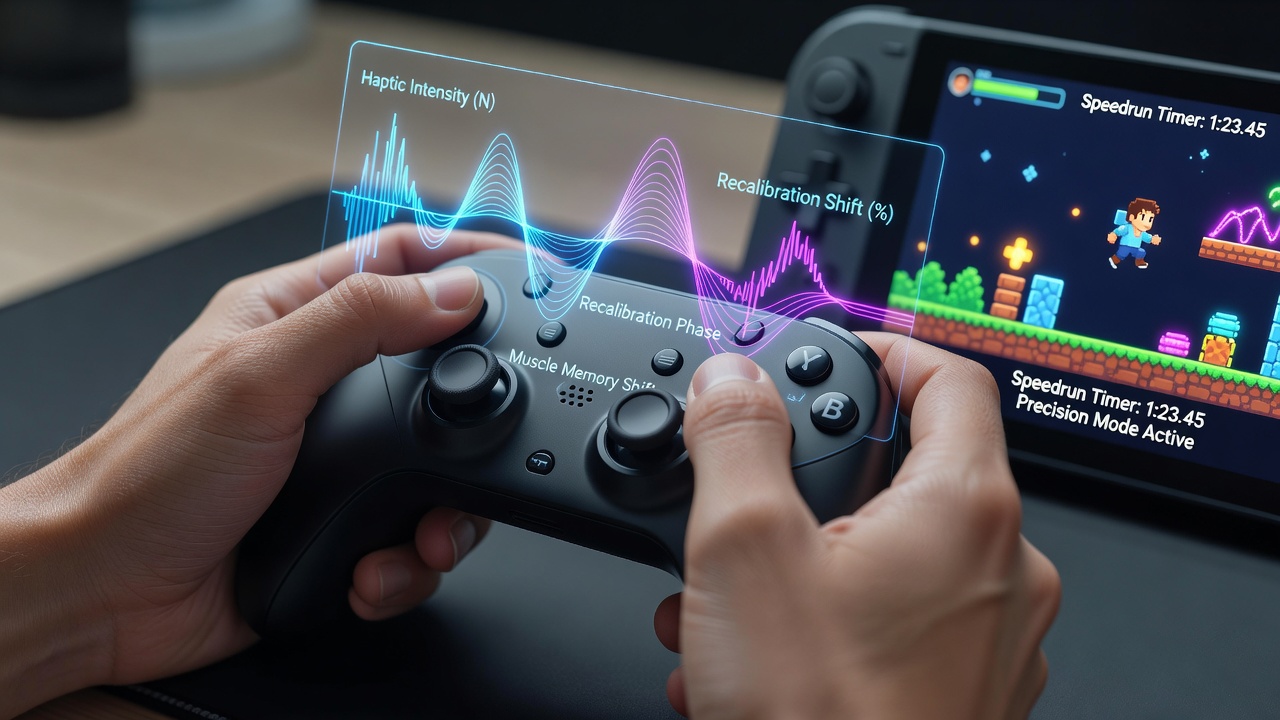
Wireless controllers on hybrid consoles integrate haptic response curves that map vibration intensity and timing to player inputs, and these systems create consistent tactile signals that players use to adjust physical movements during precision platformer speedruns. Research from the University of Melbourne indicates that such curves operate through customizable profiles where force feedback scales according to analog stick deflection and button press duration. Data collected in controlled tests shows participants reduce input variance by measurable margins when haptic cues align with specific game mechanics like pixel-perfect jumps in titles such as Celeste or Hollow Knight.
Mechanics of Haptic Response Curves
Engineers design response curves as mathematical functions that translate digital signals into physical sensations, and linear curves deliver uniform feedback while exponential variants emphasize sudden changes at higher input thresholds. On hybrid consoles wireless modules transmit these signals with minimal delay, which allows the controller to simulate surface textures or resistance levels that correspond to in-game obstacles. Studies conducted at the Technical University of Denmark reveal that players who train with adaptive curves demonstrate faster adaptation periods compared to those using fixed vibration patterns, since the system recalibrates based on repeated exposure to the same sequence of actions.
Calibration routines embedded in firmware adjust for battery voltage fluctuations and wireless interference, and this process maintains signal consistency across extended sessions. Observers note that precision platformer communities often share custom curve presets through online repositories, where data logs from successful runs highlight optimal settings for particular console models.
Muscle Memory Recalibration Process
Muscle memory forms through repeated motor patterns stored in the cerebellum, yet haptic feedback introduces an additional sensory channel that reinforces timing accuracy. When a controller delivers a distinct pulse at the exact moment a jump input registers, the player associates that sensation with the required physical effort, and this association strengthens over hundreds of attempts. Figures from a 2025 analysis by the Japan Electronics and Information Technology Industries Association show reduced reaction time variability among competitive runners who incorporated haptic training into daily practice routines.
Recalibration occurs when the curve shifts emphasis from broad vibration to fine-grained pulses, which encourages smaller corrective adjustments rather than full resets of hand position. In speedrun environments this matters because frame-perfect inputs leave little room for deviation, and the tactile layer provides confirmation that visual cues alone may not supply during high-speed segments.
Application on Hybrid Consoles
Hybrid consoles combine docked and portable modes, which means wireless controllers must maintain performance across both environments without wired connections. Battery management algorithms scale haptic intensity dynamically to preserve playtime, while maintaining the curve fidelity needed for competitive play. Platformer speedruns on these devices often occur in tournaments held throughout 2026, including events scheduled for September that feature categories restricted to wireless input devices.
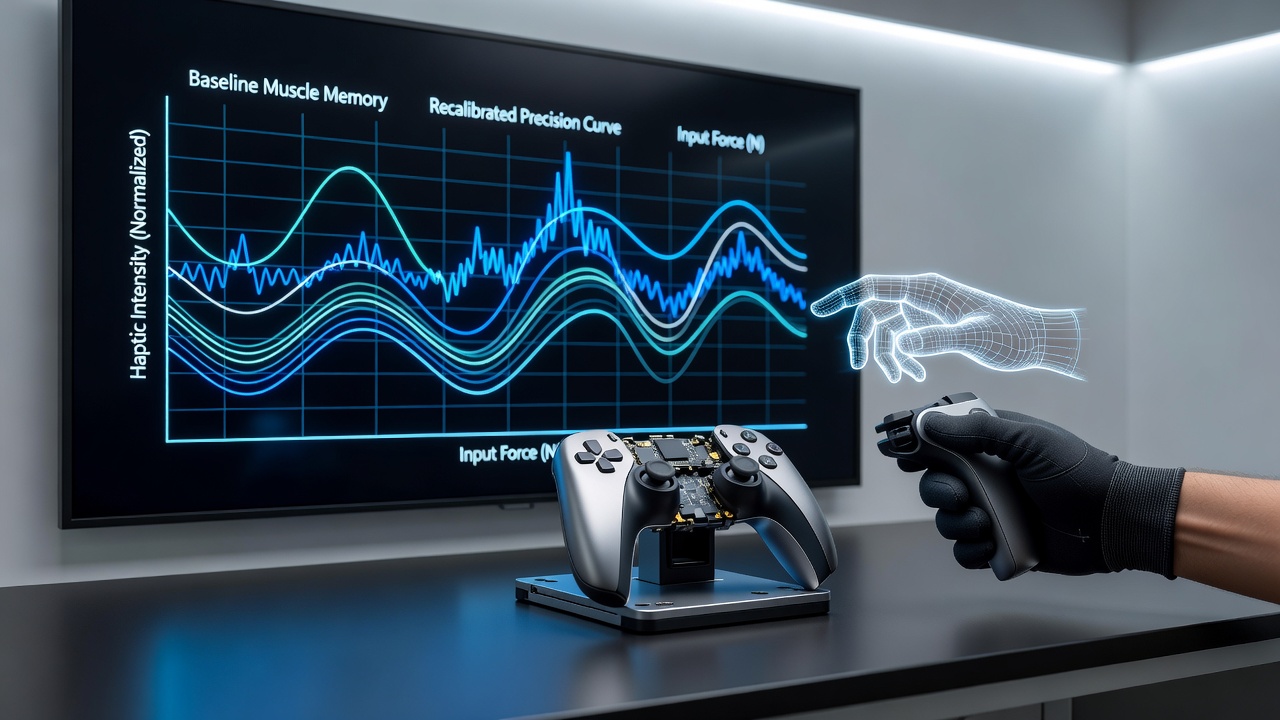
Developers release firmware updates that refine curve algorithms based on telemetry from community runs, and these patches address specific latency spikes reported in wireless environments. Players report that consistent haptic mapping across different console units reduces the need to relearn muscle patterns when switching devices mid-preparation cycle.
Evidence from Competitive Settings
Global leaderboards for precision platformers display run times that reflect incremental improvements tied to hardware features, and analysts track correlations between controller firmware versions and record progression. A report issued by the Canadian Interactive Digital Entertainment Association documents how haptic-enabled wireless setups appear more frequently among top placements in recent seasons. The data indicates measurable gains in execution reliability for sections requiring rapid direction changes combined with timed releases.
Training regimens now include deliberate curve variation drills, where runners switch profiles mid-session to test adaptability. This approach prepares competitors for unexpected firmware differences encountered at live events, and it strengthens the underlying motor pathways that support consistent performance under variable conditions.
Conclusion
Haptic response curves continue to integrate deeper into wireless controller ecosystems for hybrid consoles, and the resulting feedback mechanisms support refined muscle memory patterns essential for precision platformer speedruns. Ongoing firmware development and community-driven preset sharing sustain these advancements across competitive circuits through late 2026 and beyond.