How Community Modding Teams Are Repurposing Vintage Console Chips to Power New Indie Titles on Modern Handhelds
Eden Griffin · Oct 10, 2026
How Community Modding Teams Are Repurposing Vintage Console Chips to Power New Indie Titles on Modern Handhelds
The Rise of Retro Chip Integration
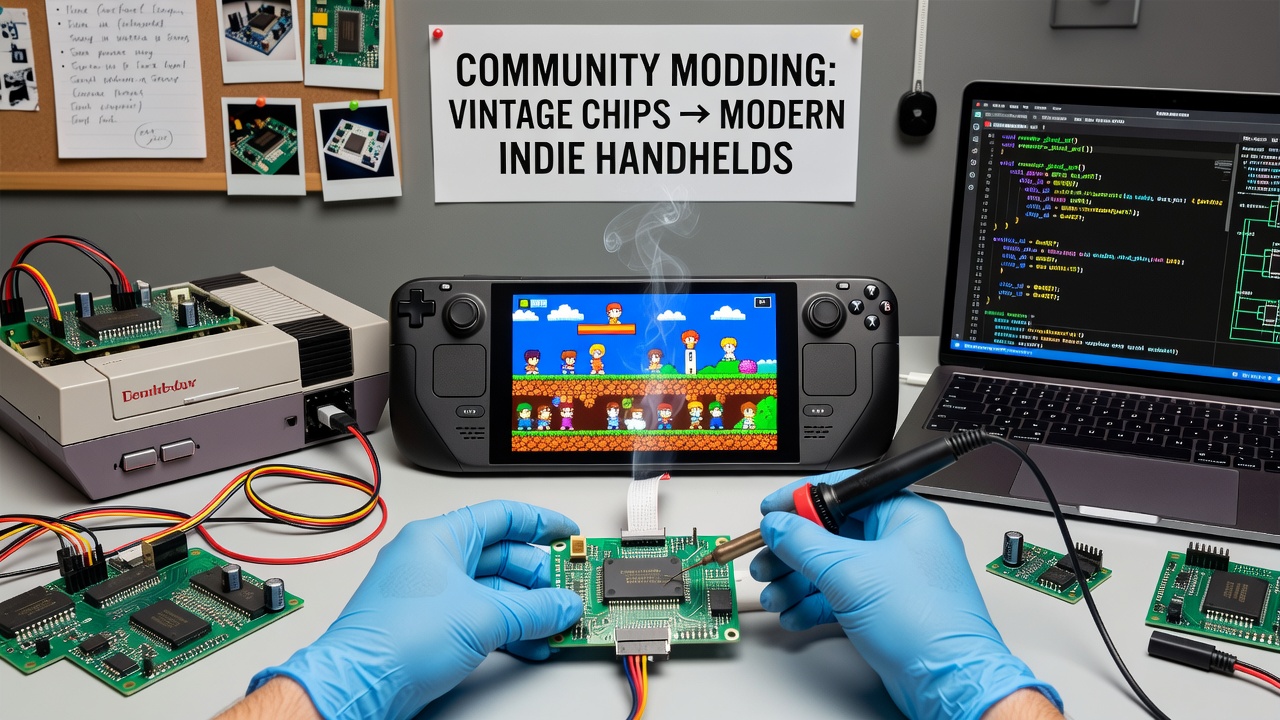
Community modding teams have expanded their focus in recent years toward extracting and adapting chips from consoles such as the Nintendo Entertainment System and Sega Genesis for use in contemporary handheld devices, and this approach gained momentum as portable gaming hardware evolved through 2025 and into October 2026. Developers working on indie titles often seek the distinctive audio processing and graphical rendering characteristics that these older components provide, which differ from standard emulation layers on devices like the Steam Deck or ASUS ROG Ally. Data from hardware modification forums indicates that dozens of small teams now collaborate across regions to source functional chips from discarded consoles, then integrate them into custom expansion boards that connect via USB-C or internal slots on modern handhelds.
Researchers at technical universities in Europe and North America have documented how these modifications allow new games to leverage authentic signal outputs from chips like the Ricoh 2A03 or Yamaha YM2612, producing sound profiles that software emulators approximate but rarely match exactly. One project completed in mid-2026 involved a team in Japan adapting Game Boy sound chips for a rhythm-based indie title running natively on updated handheld units, and reports from the Electronic Frontier Foundation highlight similar efforts that emphasize open-source documentation to guide participants worldwide.
Technical Processes Behind the Repurposing
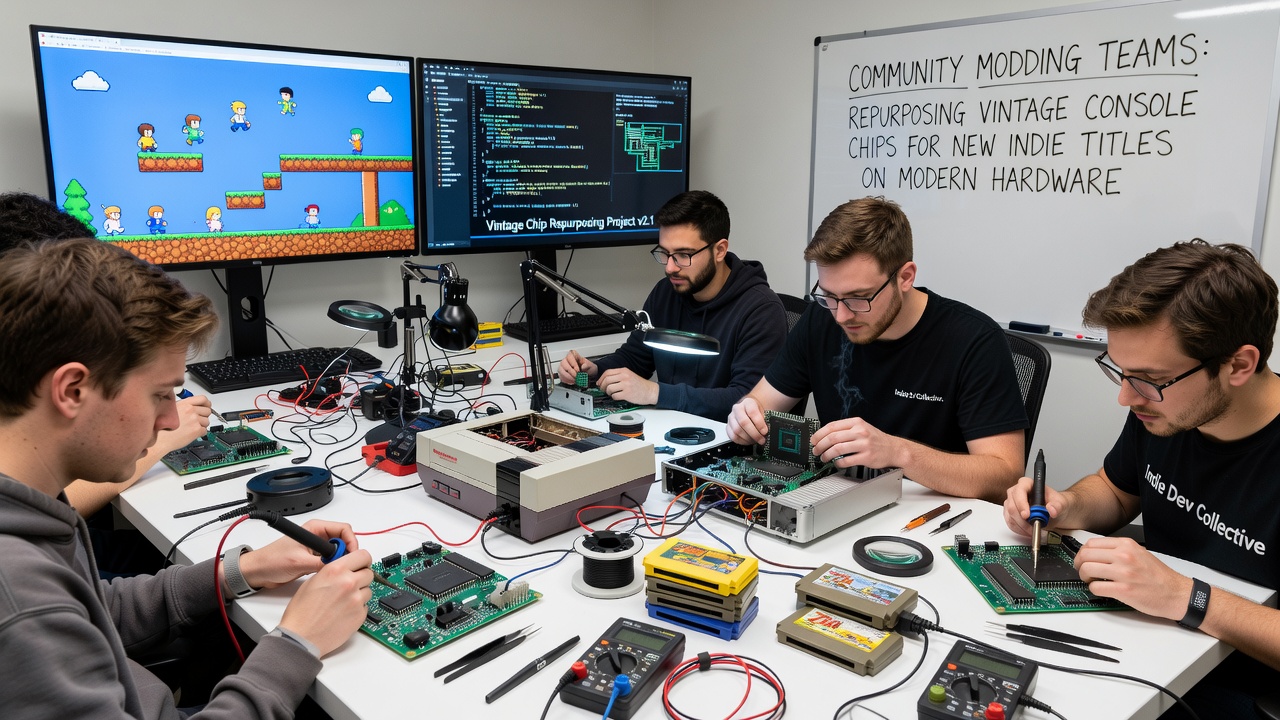
Teams begin by disassembling vintage hardware to isolate central processing units and sound chips, then test each component for viability using specialized diagnostic tools before mounting them onto adapter boards designed for current handheld architectures. Engineers apply voltage regulators and signal converters to ensure compatibility with modern power systems, while custom firmware handles data routing between the vintage chip and the handheld's primary processor. Studies conducted by the University of Waterloo in Canada reveal that successful integrations often require iterative calibration of clock speeds to prevent timing mismatches during gameplay sessions.
Software layers developed alongside the hardware modifications allow indie developers to call chip functions through application programming interfaces, and this method supports features such as real-time waveform generation that enhances chiptune compositions in new releases. Observers note that documentation shared on collaborative platforms enables rapid replication, with teams in Australia and the United Kingdom contributing refinements to power management protocols that extend battery life during extended play.
Notable Projects and Case Examples
One documented case from early 2026 featured a European collective that installed multiple SNES-era graphics chips into a fleet of handheld prototypes, enabling an indie platformer to render sprites with original hardware acceleration while running alongside contemporary rendering pipelines. The project produced several playable builds demonstrated at independent game festivals, and metrics collected during testing showed reduced latency compared to pure emulation approaches. Another initiative based in South Korea focused on repurposing PlayStation sound processors for narrative-driven titles, where the chips handled layered audio tracks that responded dynamically to player input.
These efforts align with broader trends tracked by the International Game Developers Association, whose regional reports note increased participation from modding groups seeking to preserve functional legacy components rather than relying solely on digital archives. Teams often publish schematics and code repositories that others adapt for different handheld models, creating a distributed network of technical knowledge that supports ongoing experimentation.
Challenges Encountered and Solutions Developed
Supply constraints represent a primary obstacle, since functional vintage chips become scarcer as original consoles age, prompting teams to establish partnerships with electronics recyclers across multiple continents. Signal interference issues arise during integration, yet engineers address them through shielding techniques and refined circuit layouts that maintain stability under varying thermal conditions common in portable devices. Research published by the Australian Centre for Advanced Computing indicates that iterative testing protocols have improved success rates from initial prototypes to production-ready configurations.
Regulatory considerations around hardware modification also influence project timelines, with groups coordinating to ensure compliance with regional electronics standards while advancing creative applications. Data compiled through academic networks shows that collaborative troubleshooting sessions accelerate problem resolution, allowing projects to move from concept to functional builds within months rather than years.
Implications for Indie Development in Late 2026
As October 2026 approaches, the practice continues to influence indie game design by offering developers access to sonic and visual signatures that distinguish their titles within crowded digital marketplaces. Handheld manufacturers have begun releasing models with expanded internal connectivity options, facilitating easier chip installations without extensive custom work. Industry analyses from organizations such as the Japan Electronics and Information Technology Industries Association project sustained growth in this niche segment, supported by educational workshops that train new participants in chip extraction and adaptation methods.
These developments contribute to a hybrid ecosystem where vintage hardware elements coexist with modern processing capabilities, expanding creative possibilities for small teams operating outside traditional studio structures.
Conclusion
Community modding efforts centered on vintage console chips have established practical pathways for integrating legacy components into new indie productions on current handhelds, driven by technical documentation, cross-regional collaboration, and targeted research. As these methods mature through ongoing projects and shared resources, they continue to shape accessible tools and approaches within the portable gaming space.