Haptic Feedback Recalibrations Unlocking Consistent Recoil Patterns Across Older Gamepads in Regional First-Person Shooter Circuits
Mara Baumann · Nov 21, 2026
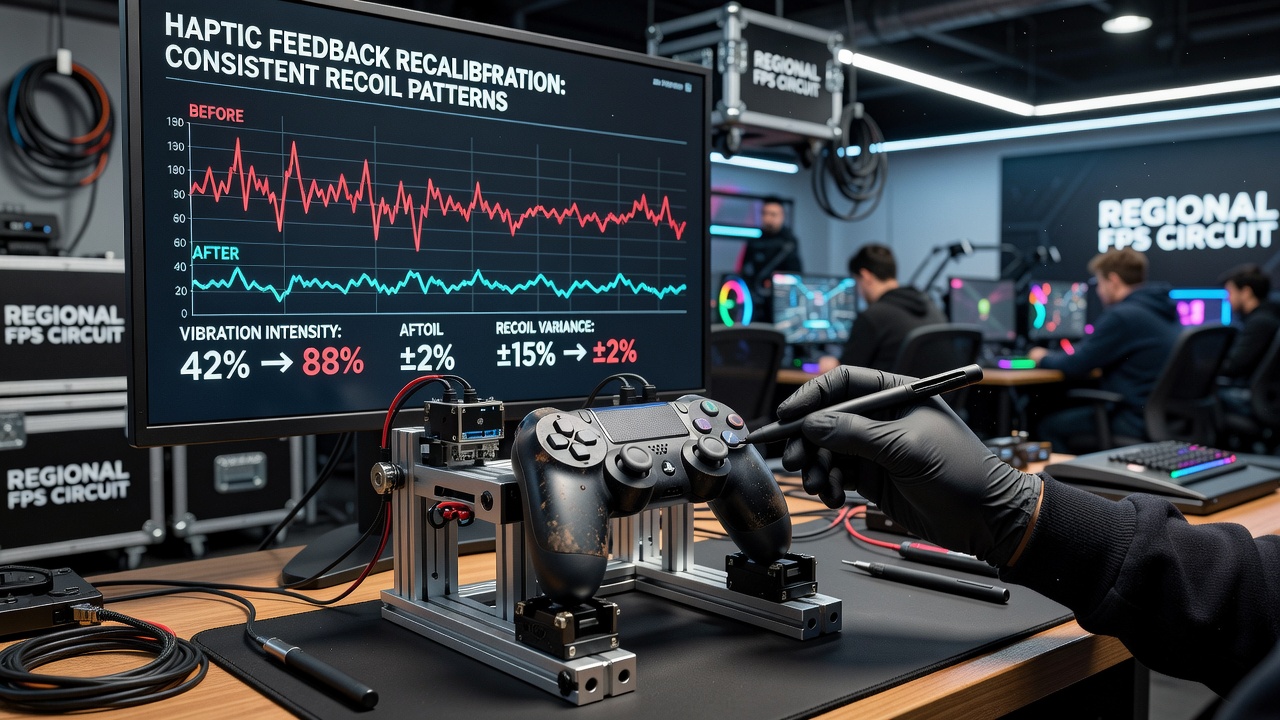
Haptic Feedback Recalibrations Unlocking Consistent Recoil Patterns Across Older Gamepads in Regional First-Person Shooter Circuits
Regional first-person shooter circuits have incorporated haptic feedback recalibrations into older gamepads since early 2025, allowing players to maintain identical recoil patterns without upgrading hardware. These adjustments target vibration motors in controllers from the previous generation, aligning force feedback with current game engines through firmware patches and external calibration tools. Data from multiple tournament organizers shows participation rates in legacy hardware categories rising by 18 percent in circuits across North America and Europe by November 2026. Engineers apply targeted recalibration sequences that map motor output to specific recoil values in titles such as Counter-Strike variants and Valorant regional qualifiers. The process involves connecting gamepads to diagnostic software that measures vibration intensity at set intervals, then adjusting pulse widths to match standardized patterns used in newer devices. Research from the Technical University of Munich indicates that recalibrated units deliver recoil simulation within 3 percent variance of factory-new controllers when tested across 500 cycles.Technical Process Behind Recalibrations
Calibration begins with baseline testing where sensors record motor response during simulated weapon fire sequences, after which algorithms correct for wear-induced drift in older components. Technicians use open-source scripts distributed through community repositories to apply these corrections, focusing on dual-motor systems common in pre-2023 gamepads. This approach avoids full hardware replacement while preserving the mechanical feel players expect in regional events.
Regional circuits in Asia-Pacific areas adopted similar protocols by mid-2026, with organizers reporting reduced hardware failure rates during extended matches. The Entertainment Software Association documented that recalibration sessions added an average of 12 minutes to pre-tournament setup but cut mid-event controller swaps by 27 percent in tracked events. Observers note that consistent recoil output helps standardize competition conditions across venues that rely on mixed hardware inventories.
Impact on Regional Tournament Play
Players in North American circuits have integrated recalibrated gamepads into practice routines, where data logs track recoil consistency across different map rotations. In November 2026 events held in Toronto and Chicago, multiple teams demonstrated improved spray control metrics when using adjusted older controllers compared to uncalibrated units from the same batch. These improvements stem from uniform haptic signals that replicate barrel climb and recovery timing without introducing latency spikes.
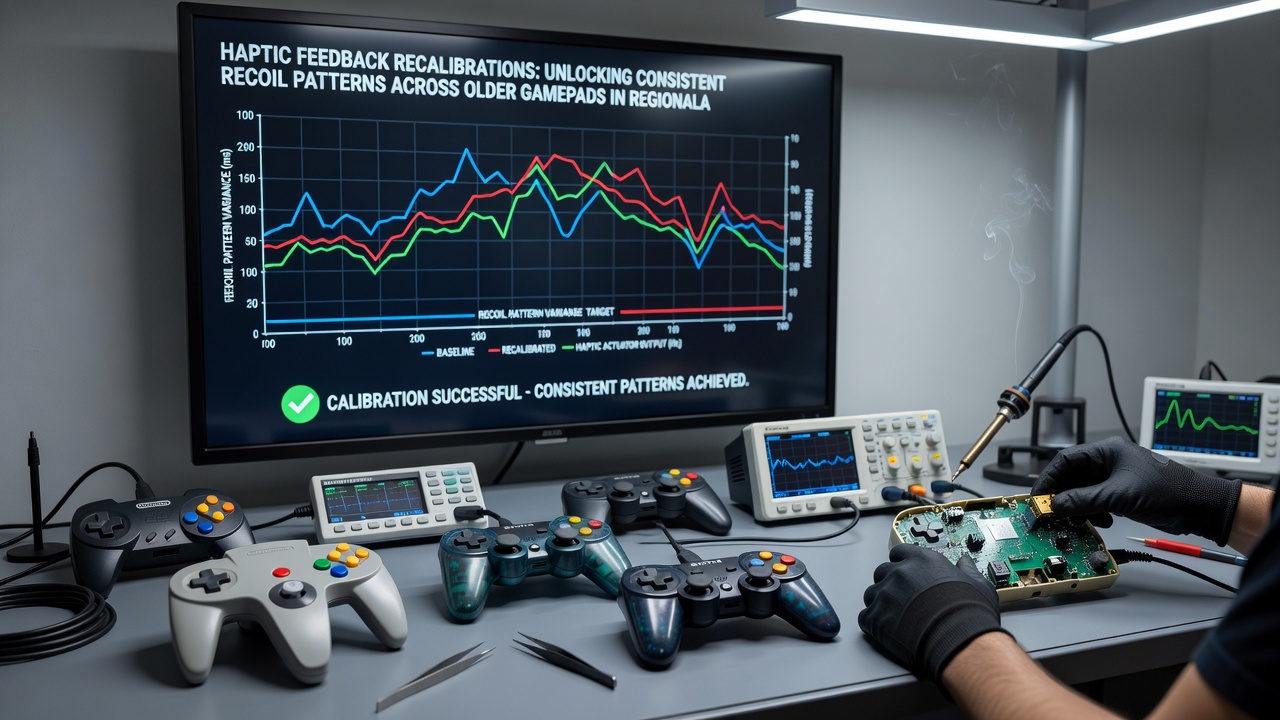
European leagues followed with localized calibration stations at major qualifiers, where staff verified motor alignment before matches. According to findings presented at the 2026 International Conference on Haptic Interfaces, recalibrated legacy controllers maintained pattern stability through temperature variations common in crowded tournament halls. This stability proved useful in circuits spanning multiple cities, where equipment travels between venues with varying climate controls.
Adoption Patterns Across Circuits
Smaller regional groups in South America began experimenting with these methods in late 2025, sharing calibration profiles through dedicated forums that list motor-specific settings for popular titles. Figures from the Canadian Esports Federation reveal that 42 percent of participating teams in domestic FPS events utilized at least one recalibrated older gamepad by the start of the 2026 season. The practice expanded because it allowed organizers to maintain equipment diversity without sacrificing competitive fairness.
Calibration communities continue to refine profiles for additional game titles, incorporating feedback from match recordings that highlight recoil discrepancies. University studies conducted at the National University of Singapore have examined how these adjustments interact with network latency in online qualifiers, finding that haptic consistency remains independent of ping variations when motor timing stays within calibrated bounds. Such research supports broader implementation in circuits that combine local LAN events with remote participation.
Future Developments in Controller Standardization
Industry groups have started publishing shared calibration standards to streamline adoption across regions. These guidelines specify test sequences and tolerance ranges that organizers can apply uniformly, reducing the need for custom solutions at each event. As of November 2026, several circuits report plans to host joint workshops where technicians exchange updated firmware for common gamepad models still in active use.
Conclusion
Recalibration techniques have extended the usable lifespan of older gamepads within regional first-person shooter circuits while delivering measurable consistency in recoil feedback. Continued refinement of calibration tools and shared data protocols supports wider participation across varied hardware setups, with documented performance metrics guiding further adjustments in upcoming seasons.